Timing your bets to align with market odds movements is the most effective approach to securing better payouts in football betting. Odds are not static. They shift constantly as sportsbooks respond to sharp money, public volume, and breaking news. Knowing when to place your bet is just as important as knowing which team to back. This guide covers the key windows where market inefficiencies create real value, how to read line movement signals like closing line value (CLV) and reverse line movement (RLM), and how Singapore football bettors can build a daily timing routine that consistently beats the market.
What are the key market inefficiency windows to time football bets?
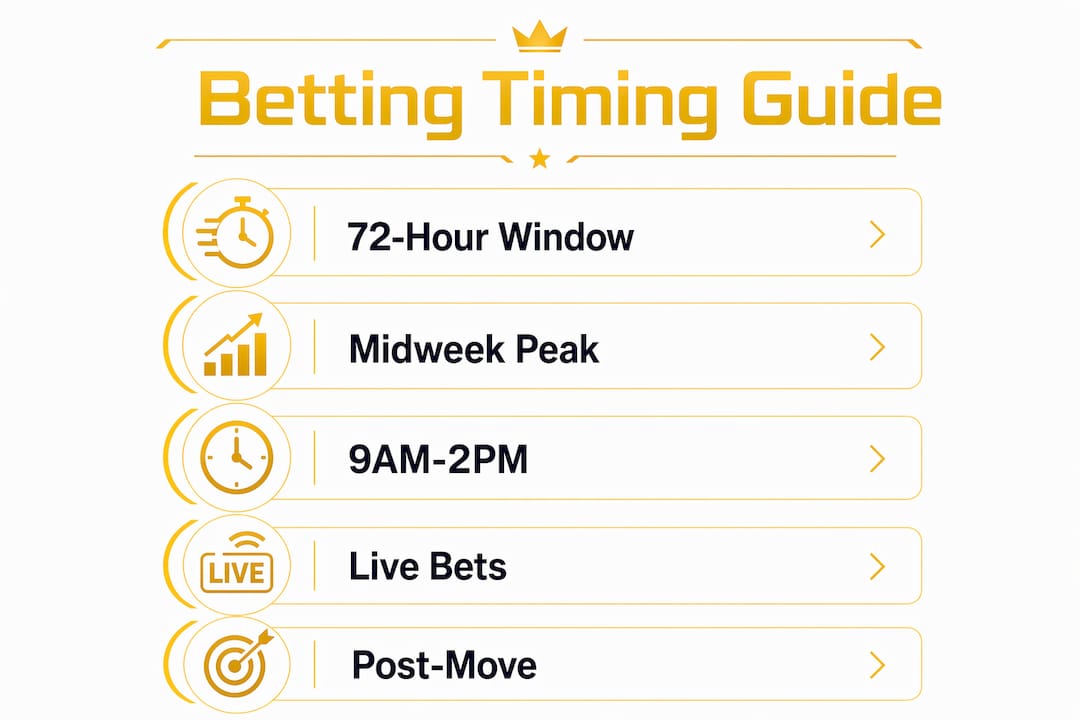
Market inefficiencies peak 72 hours before kickoff, before professional syndicates push lines toward their true value. That window is your primary target. Once you enter the final 48 hours before a match, sharp money dominates and the easy value disappears fast.
The day of the week matters just as much as the countdown clock. Tuesday and Wednesday are the strongest days for football betting value, especially for Champions League and UEFA Europa League fixtures. Lineup news creates information gaps that sportsbooks have not fully priced in yet. Recreational bettors are less active midweek, which means lines move more slowly and stay mispriced longer.

Here is how market efficiency typically varies across the week for major football fixtures:
| Day | Market efficiency level | Best opportunity type |
|---|---|---|
| Monday | Low | Early line value on weekend fixtures |
| Tuesday | Very low | UEFA midweek lineup-driven gaps |
| Wednesday | Very low | Champions League pre-match pricing |
| Thursday | Moderate | Lines tightening as sharp money enters |
| Friday | High | Weekend public money inflating lines |
| Saturday | Very high | Sharp money dominant, minimal value |
| Sunday | Very high | Closing line near true probability |
The pattern is clear. Early in the week, sportsbooks post lines with limited information. Sharp bettors have not fully entered the market yet. That gap is where you find the best pricing.
- Target fixtures posted 72+ hours before kickoff
- Focus on Tuesday and Wednesday for European club football
- Avoid betting on Friday and Saturday when public money floods the market
- Spread your bankroll across multiple early-week opportunities rather than concentrating on one late-week bet
Pro Tip: Set a calendar alert for Tuesday morning, Singapore time. Check for newly posted lines on midweek fixtures before professional syndicates have had time to react.
How can bettors interpret and leverage line movement signals for better timing?
Reverse line movement (RLM) is the most reliable signal of sharp money in the market. RLM occurs when the majority of public bets go to one side, but the odds move in the opposite direction. That contradiction tells you professional bettors are on the other side, and sportsbooks are adjusting to their positions, not the crowd’s.
Understanding RLM changes how you read every line shift. When you see a team receiving 70% of public bets but their odds are drifting longer, that is a sharp signal to consider the other side. The crowd is wrong often enough that following RLM consistently improves your long-term results.
Steam moves are a different signal entirely. A steam move is a rapid, coordinated line shift triggered by multiple sharp bettors hitting the same side across several sportsbooks simultaneously. The critical mistake most bettors make is chasing a completed steam move. By the time you notice it, the value is already gone. You end up paying the inflated price with none of the edge.
Here is a breakdown of the main movement types and how reliable each one is as a timing signal:
| Movement type | What it means | Signal reliability | Best response |
|---|---|---|---|
| Reverse line movement | Sharp money opposing public | Very high | Consider betting with the sharp side |
| Steam move (in progress) | Coordinated sharp action | High | Act immediately if you catch it early |
| Steam move (completed) | Value already captured | None | Avoid. Do not chase. |
| Public line drift | Recreational money inflating odds | Low | Fade the public on large spreads |
| Injury-driven shift | Breaking news repricing | Moderate | Verify news first, then act fast |
Key signals to watch for when tracking line movement:
- Odds moving against the public betting percentage
- Rapid line shifts of 1.5 points or more within a short window
- Multiple sportsbooks moving the same direction simultaneously
- Line movement that contradicts pre-match narrative or media sentiment
Pro Tip: Use a line movement tracker to monitor CLV in real time. Bettors who consistently beat the closing line show long-term profitability. Tracking CLV success rates between 75–80% is a strong benchmark for a well-timed betting strategy.
When and how to time your bets within daily betting hours for optimal odds
The best daily window for placing value bets is between 9 AM and 2 PM local Singapore time. Recreational bettors are largely inactive during these hours. Professional syndicates have not yet made their major moves for the day. That five-hour window gives you access to pricing that has not been corrected yet.
Off-peak hours produce slower line adjustments. Sportsbooks are less reactive when volume is low, which means a mispriced line can sit for longer before it gets corrected. Betting during peak evening hours, when recreational volume spikes, means you are competing against lines that have already been pushed by public money.
The timing of your bet also depends on what information you are waiting for. Early bets capture value before public money inflates lines. Late bets, placed after injury or lineup news breaks, can also carry strong value if you react faster than the market. The key is situational awareness, not a rigid schedule.
Practical tips for your daily timing routine:
- Check newly posted lines at 9 AM Singapore time before recreational volume builds
- Monitor injury reports and lineup confirmations as they drop, typically 24–48 hours before kickoff
- Use a betting dashboard to track multiple lines simultaneously without missing shifts
- Avoid placing bets during peak evening hours when public money is most active
- Set price alerts so you act the moment a line hits your target value
Discipline in your daily routine compounds over time. Bettors who stick to the 9 AM–2 PM window consistently access better pricing than those who bet reactively in the evening.
How to exploit live betting windows and in-game odds movement
Live betting windows last seconds to minutes. The edge exists because sportsbook pricing models lag behind real-time events. When a key player goes down injured, or a team strings together three consecutive attacking moves, the model has not yet caught up. That gap is your opportunity.
The scenarios that create the most reliable live edges include:
- A red card that shifts the balance of play before odds fully adjust
- A goalkeeper injury that temporarily misprices the favorite’s odds
- A dominant possession run that precedes a goal but has not yet moved the live line
- An overreaction to an early goal that inflates the trailing team’s odds beyond fair value
Rapid execution is critical in live betting. You are not just identifying the right bet. You are racing the model correction. Most live edges close within 30–90 seconds of the triggering event. If you hesitate, the value is gone.
Overreactions are the most common and most exploitable live betting pattern. When a heavily favored team concedes an early goal, public bettors flood the underdog side. The odds on the favorite often drift to levels that no longer reflect the actual probability of a comeback. That is a high-value live bet on the favorite, placed before the model corrects.
Pro Tip: Watch the match live, not just the odds feed. Your eyes will catch momentum shifts before the model does. Pair live viewing with a platform that offers fast bet placement, like Goldbet888’s live sports page, to execute before the window closes.
Key Takeaways
Timing your football bets around market inefficiency windows, line movement signals, and daily off-peak hours is the most reliable method for consistently securing better odds value in Singapore.
| Point | Details |
|---|---|
| 72-hour pre-match window | Market inefficiencies peak 72 hours before kickoff, before sharp money tightens lines. |
| Midweek is prime time | Tuesday and Wednesday offer the weakest market efficiency for European football fixtures. |
| Reverse line movement | RLM is the strongest signal of sharp money and the most reliable timing cue available. |
| Daily 9 AM–2 PM window | Off-peak morning hours in Singapore provide the best access to uncorrected pricing. |
| Live edges close fast | In-game opportunities last seconds to minutes; rapid execution is the only way to capture them. |
What I’ve learned about timing bets in Singapore’s football markets
Timing is not a fixed clock time. That is the single most important thing I have learned after years of watching football markets in Singapore. Bettors who chase a rigid schedule, betting at 9 AM every day regardless of market conditions, miss the point entirely. The best time is always dynamic, tied to what the market is doing right now.
The most common mistake I see is chasing exhausted line moves. A bettor spots a sharp move that happened two hours ago and jumps in. The value was captured by the people who moved first. You are just buying an inflated line and calling it a strategy.
What actually works is combining timing discipline with bankroll management. You do not need to bet every inefficiency window. You need to bet the best ones with appropriate stake sizing. Spreading your bankroll across three well-timed early-week bets beats concentrating everything on one late-week bet every time.
Singapore bettors have a specific advantage: the 9 AM–2 PM local window aligns well with European markets opening for the day. Lines on Premier League and Champions League fixtures are fresh and often mispriced during those hours. That local timing edge is real, and most bettors here do not use it.
Track your betting history consistently. You cannot improve your timing without data on when your bets perform best. Patterns emerge over 50–100 bets that are invisible in the short run.
— Jaye
Goldbet888 gives Singapore bettors a real timing edge
Goldbet888 is built for football bettors in Singapore who take odds timing seriously. The platform offers live odds across major football markets, including Premier League, Champions League, and FIFA World Cup 2026 fixtures, with real-time line updates that let you act the moment a pricing gap appears.

With reported withdrawal processing in just three minutes and a 5,000+ member Telegram community sharing match previews and lineup news, Goldbet888 gives you both the speed and the intelligence to act on timing opportunities before they close. Explore the full range of football betting markets on Goldbet888, or get the full picture with the Singapore betting guide for 2026 to sharpen your strategy before the next major fixture.
FAQ
What does “time bets for best odds movement” mean?
Timing bets for best odds movement means placing your wager during the window when market pricing is most favorable, typically before sharp money corrects the line. The goal is to beat the closing line and lock in better value than the final pre-match price.
When is the best time to place a football bet in Singapore?
The optimal window is between 9 AM and 2 PM Singapore time, when recreational volume is lowest and lines have not yet been corrected by professional money. Tuesday and Wednesday mornings are especially strong for European club football fixtures.
What is reverse line movement and why does it matter?
Reverse line movement occurs when odds move against the direction of public betting. It signals that professional bettors are on the opposite side, making it the most reliable indicator of sharp money and a strong timing cue for your own bet placement.
Should I bet early or wait for injury news before a match?
Both approaches carry value depending on the situation. Early bets capture pricing before public money inflates lines. Bets placed after confirmed injury or lineup news can also offer strong value if you react faster than the market adjusts.
How long do live betting opportunities last?
Live betting edges typically last seconds to minutes. Sportsbook pricing models lag behind real-time events like injuries or momentum shifts, creating brief windows of mispriced odds that close quickly once the model catches up.